
🎉 SAGRADA FAMÍLIA’S HISTORIC MILESTONE: A CENTURY LATER, IT REACHES NEW HEIGHTS
For nearly 144 years, the Basilica of the Sagrada Família has been an emblem of artistic ambition, spiritual devotion, and architectural daring in the heart of Barcelona. Today in 2026, this extraordinary monument has reached a historic milestone: the completion of its tallest tower — the Tower of Jesus Christ — crowned with a monumental cross and now standing at a record-breaking 172.5 meters high, making it the tallest church structure in the world.
This moment marks not just a construction achievement but a century-long legacy realised, especially poignant as the year also commemorates the 100th anniversary of the death of Antoni Gaudí, the genius architect who devoted the last decades of his life to this masterpiece.
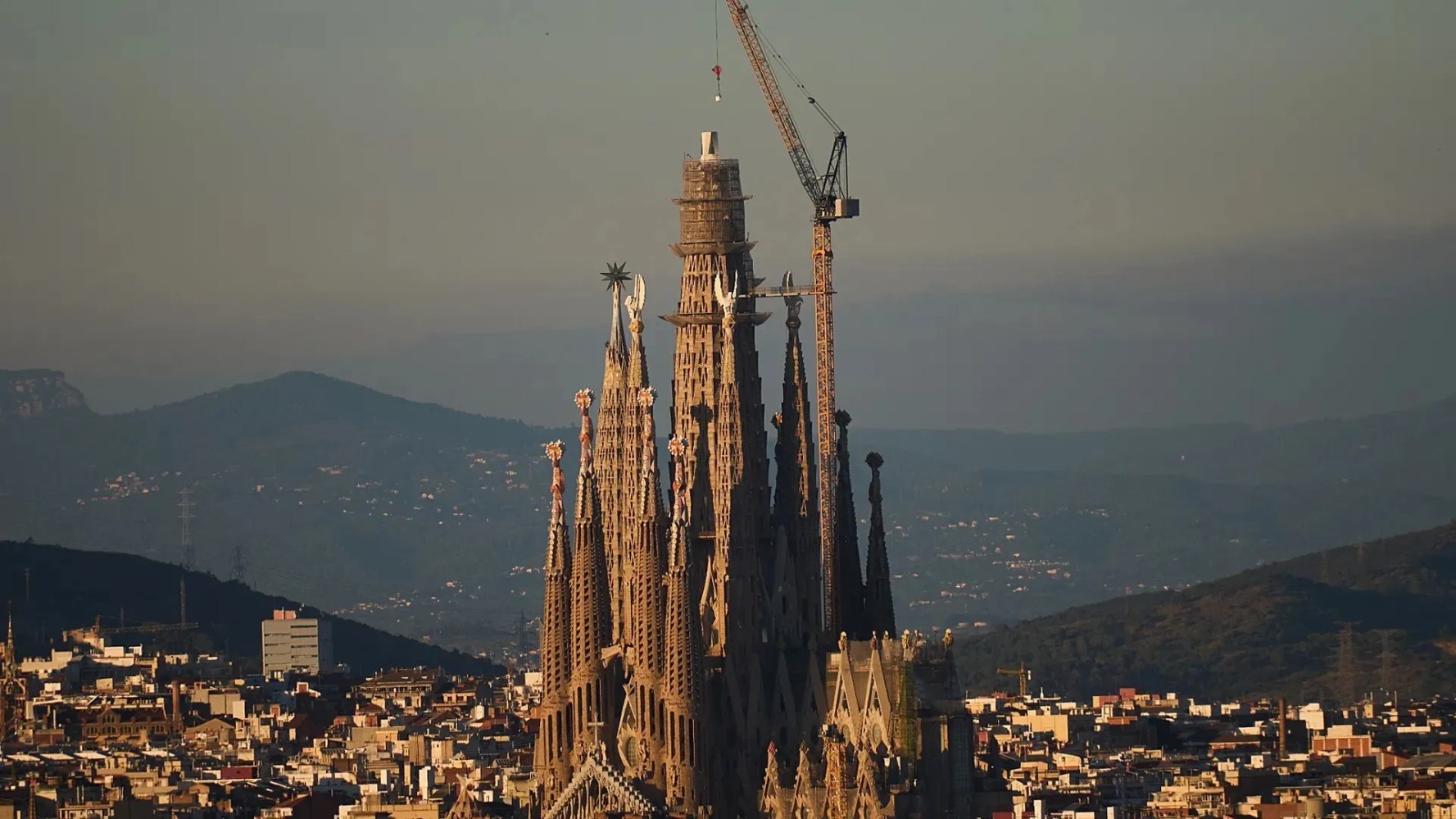
🧱 A Project Beyond Time: How the Sagrada Família Was Built
The Sagrada Família is not just a building — it’s a living legacy of creativity, innovation, and faith that spans generations.
🏗️ The Origins
-
Construction began in 1882, originally conceived in a traditional neo-Gothic style.
-
In 1883, Antoni Gaudí took over the project and transformed the design into a visionary masterpiece that blended Gothic forms with organic, nature-inspired shapes — a style that would become uniquely his own.
Gaudí believed every detail of the basilica should reflect deep religious symbolism and harmony with the natural world. His dream was monumental: 18 towers representing figures central to the Christian faith — from the Twelve Apostles to the Virgin Mary, culminating with Jesus Christ at the highest point.
🌀 Innovation and Adaptation
Gaudí’s approach was groundbreaking. He used catenary curves and natural forms — shapes inspired directly from nature — as structural elements, letting geometry and physics guide the basilica’s soaring lines and vaults.
When Gaudí passed away in 1926 after a tram accident, only a small section of the overall project — including one tower — was complete.
🔄 Continual Building Across Generations
Work continued through war, economic hardship, and dramatic architectural evolution. The Spanish Civil War in 1936 saw Gaudí’s workshop and models damaged, making later reconstruction based on surviving drawings and photos both challenging and remarkable.
In the late 20th century, modern technology — including advanced 3D modeling — helped accelerate construction, allowing builders to honour Gaudí’s complex vision more faithfully than ever.
📍 Why 2026 Is Historic — and What Comes Next
While the basilica as a whole will still evolve over the coming years, the completion of the central tower signifies the end of the primary architectural phase — a celebration that coincides with the centenary of Gaudí’s passing.
This milestone isn’t the total end of construction — some sculptural details and the last elements of the Glory Facade are expected to continue into the early 2030s — but it is the moment the world has awaited for more than a century.
To mark this momentous event, Barcelona is hosting special celebrations, cultural events, and tributes throughout 2026.
🌟 A Symbol of Barcelona — and Human Ambition
From a humble visionary project to an architectural legend, the Sagrada Família is more than a church — it’s a story of persistence, faith, and collective creativity. Each ticket bought by visitors over the years helped fund its progress. And now, finally, the sky-piercing silhouette that defines Barcelona’s skyline stands closer than ever to Gaudí’s original dream.
Want to witness this living masterpiece? There’s no better time than now — as the city celebrates this architectural triumph and Barcelona shines brighter than ever.